

If you happen to be a UK player obsessed with the high-stakes thrill of Big Bass Crash, looking under the hood at how the game is built can be very enlightening. It goes deeper than just pressing a button and wishing for luck. The game runs on a clever digital framework that blends random number generation, mathematical models, and live server processing. Learning this technical side allows you to look beyond the basic gameplay. You begin to grasp the intricate engineering that decides the crash point, handles your “cash out”, and works to keep everything honest, transparent, and exciting. Let’s break down the main parts, from the crucial Random Number Generator to the internal chat between your device and the game server that ensures each round both a surprise and fluid to play.
The Central Mechanism: Random Number Generator (RNG) Explained
The Random Number Generator (RNG) is the non-negotiable centrepiece of Big Bass Crash. Consider it a certified, digital deck of cards being shuffled forever. This complex algorithm generates results that are totally random and in no set order. It determines the exact multiplier where the game will crash each round. The moment a round starts, the RNG chooses a crash point from a huge range of possibilities and fixes it with cryptographic security. This is the crucial part for UK players: this happens in an instant and can’t be changed. Nothing you do after the round begins can alter that pre-set outcome. Independent testing labs check this RNG regularly. Their audits confirm its fairness and that it complies with UKGC standards, so every player has the same random shot at success on every single climb.
Server-Side Mechanics and Predetermined Results
The RNG plants the seed of chance, but the game server is the boss that calls the shots. Stored in a secure data centre, this server receives the RNG result and manages the entire round. It transmits the signal to start, kicks off the climbing multiplier, and finally declares the crash. This setup is “deterministic”. The crash point is set from the very beginning, but the game displays it bit by bit to increase the tension. The server also does all the important maths, calculating what each player could win based on their stake and when they cash out. Having one central point of control is crucial for security. It prevents any tampering from a player’s device and guarantees everyone in the same round sees the same game flow and result. This establishes a unified, trustworthy multiplayer space.
Client-Side Interface: What Players Experience and Engage With
The client-side is merely the presentation layer, the glossy interface you see on your screen. Developed with tools like HTML5 and WebGL, this interface paints the aquatic scene, the increasing multiplier bar, and the animated Big Bass character. It gets a live data feed from the game server and turns it into the climbing numbers and graphics you watch. Its main job is to send your actions—making a wager, hitting cash out—back to the server for approval. It has zero say in the game’s rules. Think of it as a very smart display terminal. This split between show and substance means the exciting visuals and sounds stay perfectly synced with the server’s master clock. You get a smooth, immersive experience that doesn’t compromise on fairness or security.
The Multiplier Graph: Mathematical Framework and Variance
That adrenaline-fueled climb of the multiplier isn’t just a straight line. It adheres to a specific mathematical model. This model defines the game’s volatility, its risk profile. It controls how often and where the game might crash. A high-volatility model could mean more frequent low multipliers, but with the chance of a rare, sky-high crash. A lower volatility model might deliver more consistent, mid-range multipliers. The exact algorithm controls the curve’s shape and the odds of a crash at any moment. For UK players, the takeaway is this: the model is a fixed, audited piece of the game’s code. It defines the built-in risk and reward, so players who think strategically can optimize their cash-out timing based on the game’s statistical personality over hundreds of rounds.
System Structure: Real-Time Data and Server Communication
The real-time excitement of Big Bass Crash demands a reliable network to function. Fast connections, typically using WebSocket protocol, sustain a continuous two-way link active between your device and the main game server. This enables the multiplier value transmit to you immediately and transmits your cash-out command immediately. Your own internet connection is important here. A slow or inconsistent connection can create a lag separating what the server has and what you perceive, which might result in missing your cash-out window. The system is constructed to be robust, but a solid connection is your best bet. It makes sure your actions reach the server and are confirmed without a irritating delay, preserving the gameplay responsive.
Security Protocols: Guaranteeing Fairness and Data Protection
Safety isn’t a secondary element; it’s woven into the game’s foundations. In addition to the RNG certification process, the system’s design utilizes several layers of protection. All information moving to and from the server gets encrypted using protocols like TLS, maintaining your private and financial information safe. The game’s server runs in a secure environment featuring strict access controls and systems to spot intruders. Many versions also incorporate a “provably fair” system. This offers tech-savvy players the ability to confirm, through cryptographic seeds, that the round’s outcome was generated fairly and never altered. For British players, these measures represent a genuine commitment to security. They help the game comply with the Data Protection Act and the rigorous security regulations imposed by the UKGC.

Sound and Visual Engine: Building Immersion
The captivating, underwater theme of Big Bass Crash originates from a purpose-built sound and graphics engine. This section of the machine works with the game server to activate specific visuals and sounds at exactly the right time—the water bubbles, the tense music as the line climbs, the splash and snap of the crash. These audio and visual files are kept and sent efficiently to bypass long loading screens without losing quality. The engine’s job is to create a sensory experience that amplifies the anticipation. For you, this layer is what transforms a maths-based betting game into a proper spectacle. The architecture ensures this feeling is the consistent whether you’re on a phone, a tablet, or a desktop computer.
Back-end Systems: User Accounts, Wallet, and Transaction Handling
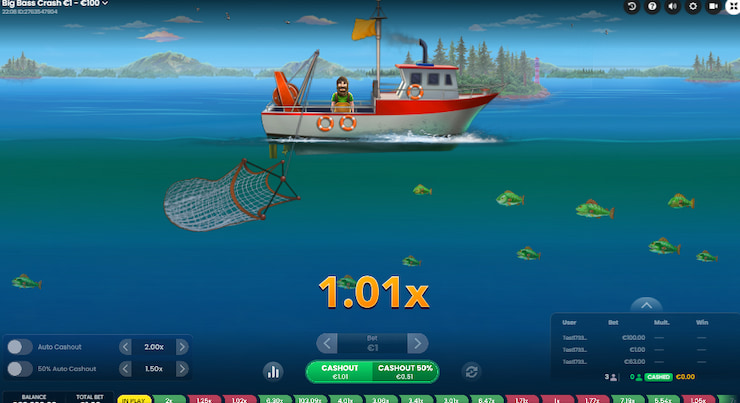
Underneath the flashy game screen, Bigbasscrashgame, a separate backend system manages everything that isn’t pure gameplay. It manages player account details, stores encrypted wallet balances, and processes your deposits and withdrawals. When you place a bet, this system instantly sets aside those funds from your wallet. If you withdraw successfully, it determines your winnings and credits them to your balance, all while maintaining a precise record of every transaction. This system integrates with different payment gateways to enable popular UK options like debit cards and e-wallets. Its trustworthiness and accuracy are absolutely critical. It manages sensitive money operations and guarantees your balance is always correct, establishing the trustworthy financial backbone of your entire experience.
Mobile and Desktop: Design Variations for Different Platforms
The core game—the system and the RNG—stays identical in any way whether you play on a smartphone, a iPad, or a desktop. But how it’s presented to you adjusts. On a handheld, the interface is tweaked for touch displays, smaller displays, and sometimes shaky network signals. The graphics might use adaptive streaming to maintain smoothness. The interface is often “responsive”, so it rearranges the structure and control sizes to fit your screen. Data exchange with the backend is also adjusted to be easier on cellular data and power. For players in the UK on the road, this means you get the identical fair, server-driven game, just presented for your gadget. The objective is a consistent Big Bass Crash gameplay across all your devices, with no drop in security or equity.








